
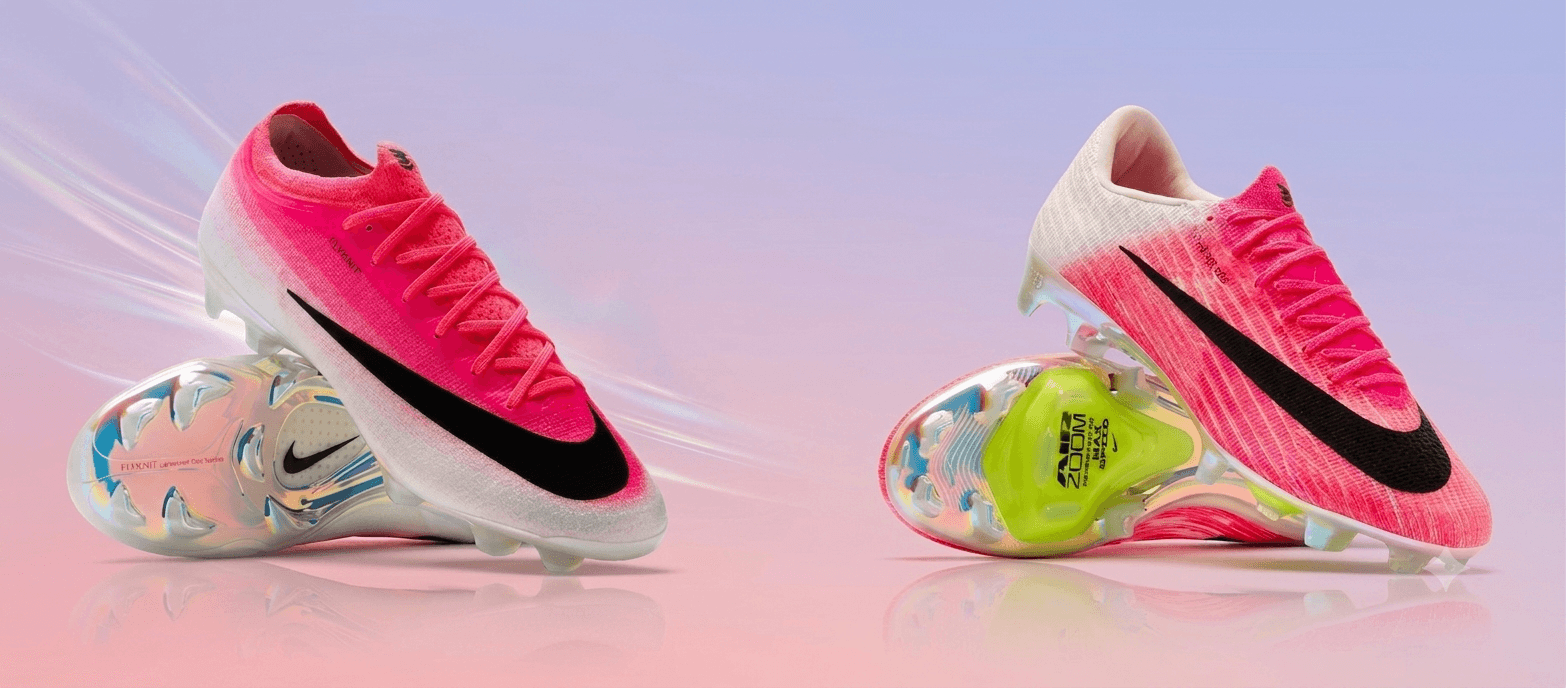
Vapor 17 vs Superfly 11: Which One Should You Buy?
July 8, 2026· By The Boots Tracker Team
Introduction
For more than ten years, picking between the Nike Mercurial Vapor and the Superfly was simple. They were the same boot. Same upper, same soleplate, same weight. The only difference was the Superfly's high-cut Dynamic Fit collar. Prefer a sock-like ankle wrap? Go Superfly. Don't? Go Vapor. Done.
That era is over.
In June 2026, Nike released the Mercurial Vapor 17 Elite and the Mercurial Superfly 11 Elite as two genuinely separate football boots for the first time. Different uppers. Different soleplates. Different philosophies. And, in the case of the Superfly, the collar that defined the silhouette for twelve years is gone entirely.
Both boots are now on pitches at the 2026 World Cup, where they are the most-worn speed boots of the tournament. Désiré Doué has been spotted switching between both models during France's campaign. Mbappé and Vinicius Jr are wearing the Scorpion colorway through the knockout stages. These are the boots of the moment.
But which one is actually right for you? Let's break it down.
The Nike Mercurial Vapor 17 Elite FG: Every Gram Counts
The Vapor has always been the stripped-back, minimalist Mercurial. With the 17, Nike pushed that principle to its logical extreme. This is a boot that wants to be forgotten the moment you put it on, so nothing sits between your foot and the pitch.
The Technology
- Upper: Atomknit, an ultra-thin high-tension knit layered over a Flyknit base. Thinner and tighter than anything Nike has used before. The yarn tension creates lockdown without adding material.
- Soleplate: FlyLight plate, thinner and stronger than the Vapor 16's plate. Nike says it's the lightest soleplate they've ever put on an elite football boot.
- Stud pattern: Reshaped chevron studs angled for agility-focused traction. These are designed for quick cuts and direction changes rather than straight-line sprints.
- Ankle: Low-cut. The traditional Vapor silhouette, no surprises here.
- Weight: Roughly 20% lighter than the Vapor 16 Elite, putting it at an estimated ~165g. That is remarkably light.
- Price: ~€260–€275 ($275)
The Vapor 17 is an exercise in subtraction. Nike stripped weight from the upper, stripped weight from the soleplate, and reshaped the studs to prioritise agility. There is no cushioning unit, no foam insole borrowed from running shoes. The idea is simple: less boot, more speed.
Who Is the Vapor 17 For?
- Wingers who build their game around pace and want to feel nothing on their feet
- Players who prioritise touch at speed, where a thinner upper means better ball feel at full sprint
- Those who loved previous Vapors and want the same philosophy taken further
- Lighter players who don't need extra cushioning to protect their feet over 90 minutes
The Vapor 17's Weaknesses
- No cushioning. At ~165g, you feel the pitch. On hard, dry summer pitches the lack of any foam or Air unit can leave your feet tired by the 70th minute.
- Narrow fit. The high-tension Atomknit runs tight. Players with wider feet will struggle.
- Durability questions. Ultra-thin uppers wear faster. If you train five times a week, expect visible wear within a couple of months.
The Nike Mercurial Superfly 11 Elite FG: Cushioned Propulsion
The Superfly's identity crisis is over. For years it borrowed everything from the Vapor and added a collar. Now, for the first time, the Superfly 11 has its own upper, its own soleplate, and its own design philosophy. And the collar? It's gone.
The Technology
- Upper: FlyWeave Ultra, a thicker, more structured knit than the Vapor's Atomknit. FlyWeave Ultra prioritises lockdown and energy return over raw weight reduction. It wraps the foot with a density you can feel.
- Soleplate: Updated Aerotrak+ with an integrated Air Zoom cushioning unit in the forefoot.
- Sockliner: ZoomX foam, borrowed directly from Nike's marathon running category. This is the same responsive foam that sits in the Vaporfly and Alphafly racing shoes.
- Ankle: Low-cut. Yes, really. For the first time since 2014, the Dynamic Fit collar is gone. The Superfly 11 is a low-cut boot.
- Weight: ~195g estimated. Heavier than the Vapor 17 but lighter than the Superfly 10.
- Price: ~€280–€310 ($310)
The Superfly 11 borrows heavily from Nike's running R&D. The ZoomX sockliner and Air Zoom unit in the soleplate create a combination that Nike describes internally as a "sprint spike for football." The goal is cushioned propulsion: explosive energy return when you push off, combined with enough padding to protect your foot over a full match.
"Nike turned the Superfly into something new. It's not a Vapor with a collar any more. It's a sprint spike dressed as a football boot, and that ZoomX foam is the real difference-maker." — The Boots Tracker Expert
Who Is the Superfly 11 For?
- Explosive forwards who make repeated high-intensity sprints and need cushioning to recover between efforts
- Players who felt previous Mercurials were too harsh underfoot on firm ground
- Bigger, more powerful attackers who generate high impact forces and benefit from responsive cushioning
- Anyone switching from the old collar Superfly who loved the boot but not the ankle wrap
The Superfly 11's Weaknesses
- Weight penalty. At ~195g, it's roughly 30g heavier than the Vapor 17. For gram-obsessed speed players, that matters.
- Price. At €280–€310, the Superfly 11 is the most expensive Mercurial Nike has ever released.
- Less raw touch. The FlyWeave Ultra upper is thicker than Atomknit. You sacrifice some of that barefoot ball feel at speed.
- The collar is gone. If you were a Superfly loyalist specifically because of the sock-like fit, this boot no longer offers that.
Head-to-Head: The Key Comparisons
Weight
Winner: Vapor 17
At ~165g versus ~195g, the Vapor 17 is about 30g lighter. That gap is noticeable. If raw weight is your primary concern, there is no debate here.
Pure Speed Feel
Winner: Vapor 17
The Vapor 17 feels faster on foot. The thinner upper, lighter soleplate, and total absence of cushioning create a sensation of nothing between you and the grass. For players who want to feel like they are running in socks with studs, the Vapor delivers that better than any elite boot on the market.
Comfort Over 90 Minutes
Winner: Superfly 11
The ZoomX sockliner and Air Zoom forefoot unit make a tangible difference on hard summer pitches. Where the Vapor 17 starts to feel unforgiving after an hour, the Superfly 11 keeps your feet fresher. If you play on dry, firm surfaces regularly, this matters more than most specs.
Cushioning and Energy Return
Winner: Superfly 11
Not a contest. The Vapor 17 has no dedicated cushioning system. The Superfly 11 has ZoomX foam and an Air Zoom unit. If you want responsive energy return from your boots, the Superfly is the only choice.
Fit
| Foot Shape | Recommended Boot |
|---|---|
| Narrow foot | Vapor 17 (Atomknit runs tight and locks down well) |
| Medium foot | Either works, but Superfly 11 offers slightly more room |
| Wide foot | Neither is ideal. Consider the Phantom GX2 instead |
| High instep | Superfly 11 (FlyWeave Ultra has more give) |
Value
Winner: Vapor 17
At €260–€275, the Vapor 17 is €20–€35 cheaper than the Superfly 11. Given that the Vapor is Nike's lighter, more radical engineering effort, the lower price makes it feel like the better deal. The Superfly's premium is justified by its running-tech cushioning, but you are paying for it.
Soleplate
Winner: Depends on your priorities
The Vapor 17's FlyLight plate is built for agility. The reshaped chevrons help with quick cuts and directional changes. The Superfly 11's Aerotrak+ with Air Zoom is built for explosive forward propulsion with cushioned landings. Neither is objectively better. Agile dribblers lean Vapor. Straight-line sprinters lean Superfly.
The Verdict: Which Should You Choose?
Buy the Mercurial Vapor 17 if:
- Weight is everything. You want the lightest possible boot.
- You are a winger or wide attacker who relies on sharp changes of direction
- You prefer maximum ball feel and a barefoot-like sensation
- You are comfortable sacrificing cushioning for speed
- You have a narrow to medium foot
Buy the Mercurial Superfly 11 if:
- You want speed with protection. Explosive pace without punishing your feet.
- You make repeated high-intensity sprints and need cushioning between efforts
- You play regularly on hard, dry pitches where comfort matters over 90 minutes
- You are a forward or striker who generates high impact forces
- You can justify the higher price for the running-tech cushioning
And what about the collar? If you were a Superfly loyalist for the Dynamic Fit collar, you need to know: it's not coming back for this generation. Both boots are low-cut now. The choice between Vapor and Superfly in 2026 is about technology and philosophy, not silhouette.
Conclusion
The Mercurial Vapor 17 and Superfly 11 are the most significant split in Nike's speed boot lineup since the Superfly concept launched in 2014. For the first time, choosing between them is a real decision about what kind of speed player you are. The Vapor strips everything away. The Superfly adds cushioned technology from Nike's running labs. Both are worn by the best players on the planet at the World Cup right now.
Compare prices on both boots at Boots Tracker and see which retailers have stock in your size.
Compare prices by boot:
Related Articles: