
Voetbalschoenen Inlopen Zonder Blaren of Pijn (Gids 2026)
18 februari 2026· Door The Boots Tracker Team
Introductie
Je hebt net een nieuw paar schoenen gekocht. Ze zien er perfect uit. Maar de eerste keer dat je ze draagt voor een volledige trainingssessie, kom je thuis met blaren op je hiel, je pink is rauw, en de stijve bovenkant heeft een rode striem achtergelaten op je enkel. Klinkt bekend?
Voetbalschoenen inlopen is een van de meest onderschatte vaardigheden in het amateurvoetbal. Spelers op elk niveau geven serieus geld uit aan schoenen en ruïneren dan de ervaring — en veroorzaken soms echte blessures — door het proces te haasten. Het goede nieuws is dat voetbalschoenen correct inlopen eenvoudig is als je begrijpt wat er werkelijk met de materialen gebeurt en hoe je ermee moet samenwerken in plaats van ertegen.
Deze gids behandelt alles: de juiste tijdlijn, bewezen technieken voor verschillende materialen, veelgemaakte fouten om te vermijden, en hoe je met blaren omgaat als ze toch verschijnen.
Begrijpen Wat "Inlopen" Eigenlijk Betekent
Verschillende schoenmaterialen vereisen fundamenteel verschillende benaderingen voor het inlopen. Voordat je een techniek probeert, identificeer je waarvan je bovenkant gemaakt is.
Lederen Bovenkanten (K-leder, Kalfsleer, Synthetisch Leder)
Schoenen zoals de Adidas Copa Pure, Nike Tiempo Legend en Mizuno Morelia gebruiken natuurlijke of bijna-natuurlijke lederen bovenkanten. Leder reageert op warmte en vocht — het wordt zachter, zet iets uit en vormt zich in de loop van de tijd naar de precieze vorm van je voet. Daarom voelen lederen schoenen die een seizoen gedragen zijn als maatschoenen.
Het inloopproces voor leder is geleidelijk maar voorspelbaar. Geef het tijd en het zal je belonen.
Breisel/Mesh-Bovenkanten (Flyknit, Primeknit, Gripknit)
Moderne schoenen zoals de Nike Phantom GX 2 (Gripknit), Adidas Predator (breiselbasis) en veel Puma Future-modellen gebruiken gemanipuleerde breiselbovenkanten. Deze zijn fundamenteel anders dan leder — ze vormen zich niet zozeer als dat ze zich nestelen en aanpassen. Breisselschoenen zijn vaak comfortabeler uit de doos, maar kunnen specifieke drukpunten hebben die tijd nodig hebben om te verzachten.
Synthetische Bovenkanten
Mid-range en budgetschoenen van alle merken gebruiken synthetische materialen — typisch een PU- of TPU-coating over een stoffen basis. Deze zijn het meest duurzaam maar ook het stijfst aanvankelijk. Ze worden geleidelijk zachter met gebruik, maar vormen zich nooit zo goed naar de voet als leder.
"De meeste schoenSchade — blaren, hielwrijving, teenboxpijn — treedt op in de eerste drie sessies. Doe die goed, en de rest van het seizoen verloopt soepel. Haasten, en je vecht het hele jaar tegen je schoenen." — The Boots Tracker Expert
De Correcte Inlooptijdlijn
Week 1: Draag ze thuis
Dit is de stap die de meeste spelers overslaan. Doe je nieuwe schoenen thuis aan voor 20–30 minuten per dag gedurende 3–4 dagen. Loop rond. Je voeten verwarmen het materiaal en beginnen de eerste indruk van je voetvorm te creëren zonder de impact, compressie of het vocht van het trainen.
Voor lederen schoenen specifiek, overweeg ze te dragen met licht vochtige sokken (niet nat — vochtig) tijdens binnensessies. Het vocht maakt het leder tijdelijk buigzamer en versnelt het vormen.
Week 2: Alleen lichte training
Eerste gebruik op gras moet een lichte sessie zijn — warming-up, technische oefeningen, passen. Geen volledige competitieve wedstrijd. 30–45 minuten maximum. Dit is een verkenningsexpeditie. Noteer waar de schoen strak aanvoelt, waar hij wrijft, en waar hij goed aanvoelt. Die probleemzones hebben aandacht nodig voordat je verder gaat.
Week 3: Progressieve volledige sessies
Tegen week drie kun je overgaan naar volledige trainingssessies. Houd blaren en hotspots nauwlettend in de gaten. Als specifieke gebieden nog steeds problemen veroorzaken, pak ze dan aan (zie hieronder) voordat je ze voor een competitieve wedstrijd draagt.
Week 4: Wedstrijddag
Vier weken geleidelijk inlopen is de correcte tijdlijn voor een lederen of stijve synthetische schoen. Breiselbovenkanten hebben vaak slechts 2–3 weken nodig. Premium K-leder (Copa, Tiempo) kan 5–6 weken nodig hebben om volledig te vormen.
Draag geen gloednieuw paar schoenen naar een wedstrijd in het weekend dat ze aankomen. Dit is de grootste fout die spelers maken.
Bewezen Inlooptechnieken
1. Draag Dikke Sokken Thuis
Het aantrekken van het dikste paar voetbalsokken dat je hebt en je nieuwe schoenen thuis ronddragen is de veiligste en meest effectieve eerste stap. Het extra volume duwt de bovenkant licht naar buiten, waardoor de initiële rek ontstaat zonder wrijving van een veldoppervlak.
Ideaal voor: alle schoentypen.
2. De Vochtige Ledermethode (Alleen Lederen Schoenen)
Maak een doek vochtig en veeg de binnenbekleding van de schoen en de binnenkant van de bovenkant af (niet doorweekt — vochtig). Trek je normale voetbalsokken aan en draag de schoenen 20–30 minuten terwijl het leder nog vochtig is. Het vocht maakt het leder tijdelijk buigzamer, waardoor het zich sneller naar je voet kan vormen.
Dompel lederen schoenen niet onder in water. Dit kan de stiksel beschadigen, de zoolplaat vervormen en scheuren veroorzaken wanneer het leder te snel droogt.
Ideaal voor: K-lederen en kalfsleren bovenkanten (Copa, Tiempo, Mizuno Morelia).
3. Blarenpreventietape
Breng dunne blarenpreventietape of pleisters aan op bekende hotspots voordat je je eerste trainingssessies begint. De hiel, de pink en het gebied achter het enkelbot zijn de drie meest voorkomende drukpunten in nieuwe schoenen. De tape stopt het vormen van de schoen niet — het beschermt alleen de huid terwijl het proces plaatsvindt.
Anti-blaarpotloden (Body Glide en vergelijkbare producten) zijn een alternatief als tape oncomfortabel is onder sokken.
Ideaal voor: alle schoentypen.
4. Gebruik een Schoenstrekker voor Hardnekkige Strakke Plekken
Als je een specifieke strakke zone hebt — meestal de voorvoetbreedte of de teenbox — kan een houten of plastic schoenstrekker 's nachts zachte, constante druk uitoefenen om lokale rek te creëren. Dit is vooral nuttig voor synthetische bovenkanten die minder snel reageren op de vochtige methode.
Plaats de strekker, stel in om lichte druk te creëren, en laat 2–3 nachten staan.
Ideaal voor: synthetische en lederen bovenkanten met specifieke strakke plekken.
5. Buig en Kreuk de Voorvoet
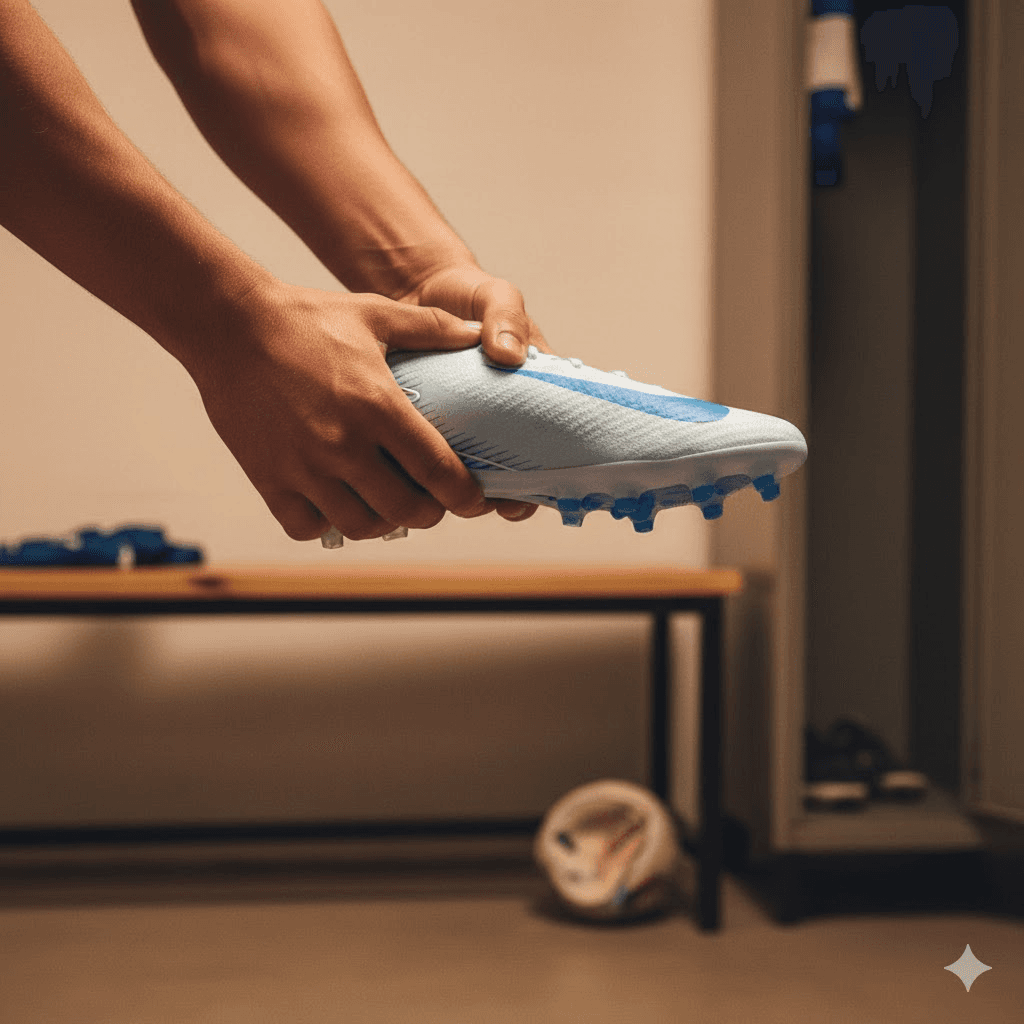
Nieuwe schoenen, vooral die met stijvere synthetische bovenkanten of dikker leder, kunnen een uitgesproken buigpunt hebben over de voorvoet waar de schoen buigt als je loopt. Houd de schoen stevig vast bij de hiel en teen en buig hem voorzichtig voor-en-achterwaarts 20–30 keer voor je eerste sessie. Dit creëert de initiële plooi op het natuurlijke buigpunt en vermindert de schokkerige stijfheid tijdens je eerste sessie.
Ideaal voor: synthetische en lederen bovenkanten. Niet nodig voor breiselbovenkanten.
6. Conditioneren voor Lederen Schoenen
Breng na je eerste paar sessies een kleine hoeveelheid lederconditioner of dubbin aan op je lederen bovenkant. Dit houdt het leder soepel terwijl het vormt, voorkomt scheuren en verlengt de levensduur van de schoen dramatisch.
Breng conditioner aan: na de eerste twee of drie sessies, daarna elke 3–4 sessies. Werk het in met een zachte doek, laat een uur absorberen, veeg dan het overtollige weg.
Merken zoals Nikwax, Kiwi en Tarrago maken uitstekende voetbalschoens-specifieke conditioners. Vermijd zware wassen op breisel- of synthetische bovenkanten — ze blokkeren de ademend.
Veelgemaakte Fouten om te Vermijden
Fout 1: Nieuwe schoenen direct naar een wedstrijd dragen
Er is geen slechtere testomgeving voor een nieuwe schoen dan een competitieve wedstrijd. De adrenaline maskeert vroege waarschuwingspijn, je speelt langer en harder, en je kunt niet stoppen om problemen aan te pakken. Loop altijd eerst in.
Fout 2: Schoenen drogen bij een radiator of met een föhn
Hoge warmte tast zowel leder als synthetische materialen snel aan. Het droogt leder tot het punt van scheuren, vervormt synthetische zolen en kan de lijmverbinding op de bovenkant-naar-zool-verbinding aantasten. Droog schoenen altijd op kamertemperatuur, losjes gevuld met krantenpapier om de vorm te behouden.
Fout 3: Vroege waarschuwingsblaren negeren
Een kleine warmtespot na sessie één die je negeert, wordt een open blaar bij sessie twee en een wond bij sessie drie. Pak drukpunten onmiddellijk aan — tape, strekken of het veteringpatroon wijzigen.
Fout 4: Je vetering aantrekken voor een strakker gevoel
Spelers die hun nieuwe schoenen iets te ruim vinden, trekken soms de veters strakker aan als compensatie. Dit verschuift de druk vaak naar het verkeerde deel van de voet. Als schoenen echt te groot zijn, ruil ze dan in — probeer niet te compenseren met vetering.
Fout 5: Te veel conditioneren van leder
Meer conditioner betekent niet sneller vormen. Te veel leder conditioneren verzadigt het, waardoor het zacht wordt tot het punt van structureel integriteits verlies. Een dunne, gelijkmatige applicatie elke paar sessies is alles wat je nodig hebt.
Omgaan met Blaren Als Ze Verschijnen
Zelfs met de beste voorbereiding verschijnen er blaren. Hier is hoe je ze beheert:
- Intacte blaar: Houd hem intact indien mogelijk — het vocht beschermt het weefsel eronder. Bedek met een gewatteerde pleister en ga door.
- Gebarste blaar: Reinig met antisepticum, bedek met een niet-kleef verband en houd schoon. Gebarsten blaren op voeten zijn kwetsbaar voor infectie gezien de schoenomgeving.
- Terugkerende hotspot: Als hetzelfde gebied twee keer blaren krijgt, is die schoen de verkeerde maat of heeft een fabricagefout. Het zal niet verbeteren met gebruik — neem contact op met de retailer.
Hoe Lang Duurt Volledig Inlopen?
| Schoentype | Comfortabel voor Training | Volledig Gevormd |
|---|---|---|
| K-leder (Copa, Tiempo Elite) | 2–3 weken | 5–8 weken |
| Kalfsleer / synthetisch leder | 2 weken | 4–6 weken |
| Breisel (Gripknit, Primeknit) | 1–2 weken | 3–4 weken |
| Hard synthetisch | 3–4 weken | 6–8 weken |
Conclusie
Voetbalschoenen inlopen is niet ingewikkeld, maar het vereist geduld — precies datgene wat de meeste spelers verliezen wanneer ze enthousiast zijn over een nieuw paar. Volg de vier-weken-tijdlijn, gebruik de vochtige ledermethode of strekker voor hardnekkige plekken, bescherm je huid met tape tijdens vroege sessies en houd je leder geconditioneerd.
Correct gedaan transformeert het inloopproces een stijve, generieke schoen in een stuk schoeisel dat jou perfect past en je vertrouwen geeft op het veld. Fout gedaan geeft het je blaren, verspild geld en een paar schoenen waar je uiteindelijk een hekel aan hebt.
Als je op zoek bent naar een nieuw paar, vind de beste prijzen bij Europese retailers op Boots Tracker — zodat je de juiste schoen voor de juiste prijs kunt krijgen en het inloopproces correct kunt beginnen.
Gerelateerde Artikelen: