
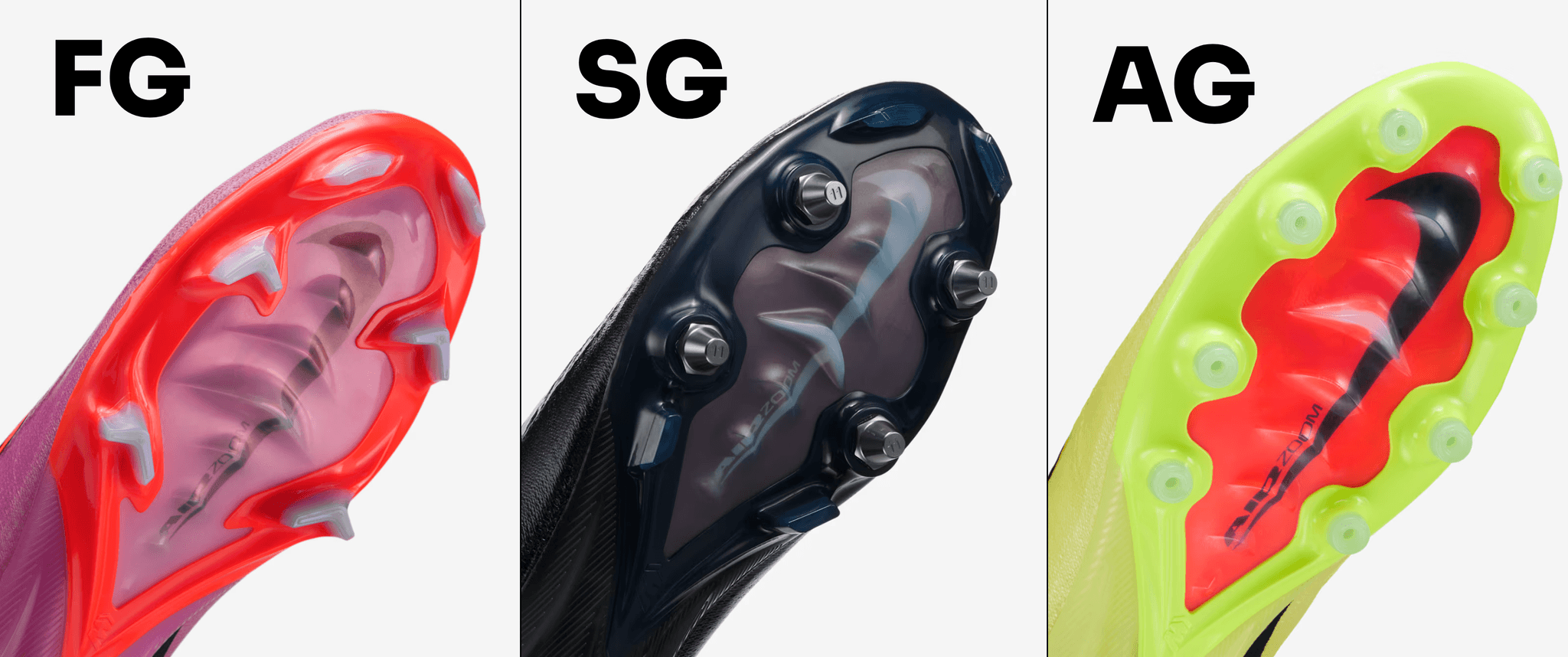
The Ultimate Guide to Football Boot Sole Plates
December 6, 2025· By The Boots Tracker Team
Introduction
Ever slipped during a crucial moment or felt uncomfortable stud pressure on an artificial pitch? The culprit might be hiding right under your feet. Choosing the right football boots is about more than just the brand or colorway—it's about the sole plate. This is the single most critical factor influencing your performance, safety, and comfort.
Each sole type is an intricate piece of engineering, designed to provide optimal grip, stability, and agility on a specific playing surface. Using the wrong one doesn't just hinder your game; it significantly increases your risk of injury. This guide will turn you into an expert, breaking down the differences between Firm Ground (FG), Soft Ground (SG), Artificial Ground (AG), and more, so you can dominate any surface you play on.
Firm Ground (FG): The All-Rounder
Firm Ground boots are the most common and versatile option, making them the go-to for most players.
- Best For: Natural grass pitches that are dry or only slightly damp.
- The Tech: FG sole plates feature a series of non-removable molded studs, which can be conical (for rotational agility) or bladed (for aggressive traction during acceleration and deceleration). Many modern boots, like the Nike Mercurial Vapor, use a hybrid pattern to offer the best of both worlds.
- Expert Take: While many attempt to use FG boots on artificial grass, we strongly advise against it. The longer studs can get caught in the synthetic fibers, increasing the risk of joint injuries, and the higher stud pressure can be uncomfortable.
"Your boots are your connection to the pitch. An FG sole is your most reliable tool, but only when used on the surface it was designed for." — The Boots Tracker Expert
Soft Ground (SG): For Wet and Muddy Pitches
When the heavens open and the pitch turns soft, SG boots are your best friend.
- Best For: Wet, soft, or muddy natural grass pitches that require deep traction.
- The Tech: SG sole plates are characterized by fewer, longer metal studs that are often screw-in and replaceable. This allows them to penetrate deep into the soft ground for maximum grip. Modern SG boots, often labeled "SG-Pro" by brands like Nike and Adidas, feature a mixed sole plate, combining 6-8 metal studs with shorter, molded studs for better stability and pressure distribution.
- Expert Take: Never use SG boots on firm ground or artificial grass. The long metal studs will be ineffective, incredibly uncomfortable, and pose a significant injury risk to yourself and other players.
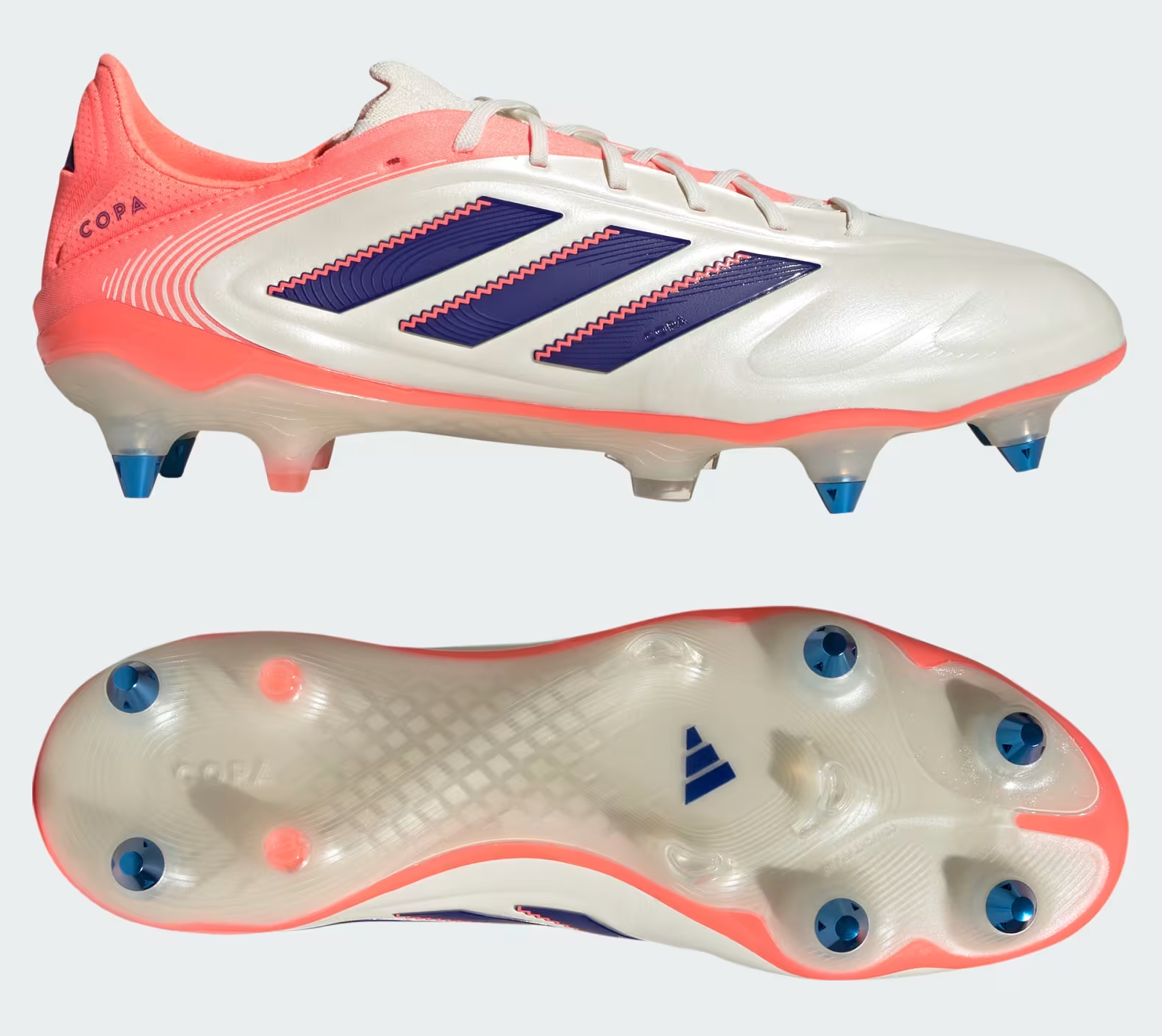 The mixed sole plate of a modern SG-Pro boot combines metal and molded studs.
Artificial Ground (AG): Master of the Modern Pitch
With the rise of 3G and 4G artificial pitches, AG boots have become an essential piece of kit.
- Best For: Modern artificial grass pitches with rubber-infill.
- The Tech: AG sole plates feature a higher number of shorter, hollowed-out conical studs. This design serves several key purposes:
- Even Weight Distribution: Reduces the painful stud pressure often felt when using FG boots on artificial turf.
- Reduced Friction: The hollow studs help to dissipate heat.
- Injury Prevention: The shorter studs are less likely to get "stuck" in the turf during rotational movements.
- Expert Take: Investing in a dedicated pair of AG boots is one of the smartest moves a player can make if they regularly play on artificial surfaces. Your joints will thank you.
Other Essential Sole Plates
Multi-Ground (MG)
A versatile hybrid option for players who switch between dry natural grass and artificial grass. MG boots use a configuration of shorter, rounded plastic studs to provide decent performance on both surfaces. While convenient, they don't offer the specialized performance of a dedicated FG or AG plate.
Turf (TF)
Designed for older, sand-based "astroturf" (2G) pitches, gravel, or street football. The sole is covered in dozens of small rubber nubs, offering excellent grip and cushioning on hard, abrasive surfaces.
Indoor Court (IC)
Also known as "IN" or "Sala," these are for indoor football or futsal. They feature a flat, non-marking rubber outsole designed for maximum grip on smooth surfaces like wood or PVC.
Conclusion
Choosing the right sole plate isn't just a detail—it's fundamental to your performance and well-being. By matching your boot to the surface, you ensure optimal traction, comfort, and, most importantly, safety. Before your next purchase, take a moment to consider where you'll be playing most, and use this guide to equip yourself with the perfect tool for the job.
Ready to find your next pair? Explore our site to compare prices on boots with every type of sole plate!
Tags: #FootballBoots #SolePlates #FG #AG #SG #BootGuide #TechTalk
Related Articles: